
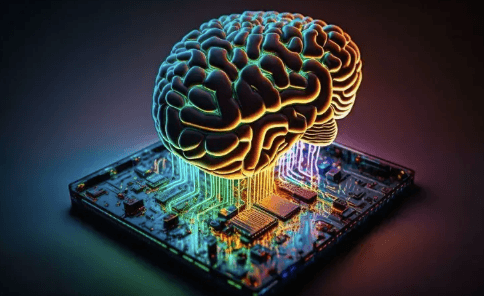
Neuromorphic computing offers AI a hardware-software paradigm that emphasizes distributed, event-driven processing and local learning. Spiking neural models enable asynchronous, low-power operations with potentially lower latency for perception and control tasks. Real-world deployments show edge readiness and robustness under tight constraints, while on-device adaptation supports autonomy. Evaluations weigh energy, speed, and scalability to chart principled roadmaps, yet critical questions remain about interoperability, training pipelines, and long-term reliability as systems scale. This tension invites closer examination of design choices and their consequences.
What Neuromorphic Computing Is for AI
Neuromorphic computing for AI refers to hardware and architectures that emulate the brain’s neural principles to perform computation more efficiently than traditional von Neumann systems. It enables neural efficiency by distributing processing across interconnected elements, fostering parallelism and low-power operation. This brain inspired hardware targets real-time adaptation, scalable learning, and fault tolerance, guiding future AI toward autonomous, energy-aware intelligence.
How Spiking and Event-Driven Compute Boost AI Efficiency
Spiking and event-driven compute implement a departure from continuous, clocked processing by leveraging asynchronous signal changes that encode information as discrete events. In this framework, spiking energy and sparse activity reduce energy per operation while preserving throughput, as data paths react only on meaningful transitions.
Event driven latency shortens response times, enabling scalable, low-power AI pipelines with flexible, brain-inspired timing.
Real-World AI Use Cases Fueled by Brain-Inspired Silicon
Real-world deployments of brain-inspired silicon demonstrate measurable gains across domains such as robotics, autonomous systems, and edge AI, where energy efficiency, latency, and robustness are paramount. These trajectories reveal neural efficiency in constrained environments, enabling adaptive inference under space constraints, while preserving stable training dynamics and rapid on-device reasoning.
The forward-looking potential emphasizes scalable, low-power AI without compromising precision or reliability.
See also: OmegaFusion Intelligence Register – 5124107876, 2317360708, 9738810100, 3294918307, 18889841903
Evaluating Neuromorphic Solutions: Tradeoffs and Roadmaps
Evaluating neuromorphic solutions requires a structured appraisal of tradeoffs among energy efficiency, latency, scalability, and robustness under varied workloads.
The discussion articulates a formal tradeoffs roadmap, aligning evaluation criteria with architectural diversity and workload representativeness.
It emphasizes measurable benchmarks, cross-layer coherence, and risk assessment, guiding practitioners toward principled choices, predictable performance, and adaptable roadmaps for future neuromorphic integration.
Frequently Asked Questions
How Close Is Neuromorphic Hardware to Mainstream AI Deployment Timelines?
Neuromorphic hardware likely remains years from mainstream AI deployment, with convergence accelerated by novel training paradigms and energy efficiency gains, yet lingering integration challenges and standardization hurdles temper near-term timelines despite promising performance and freedom-oriented research directions.
Can Neuromorphic Systems Learn Continuously Without Retraining?
Neuromorphic systems can achieve continuous learning with local plasticity and on-chip adaptation, though challenges remain in stability and long-term memory retention. They emphasize energy efficiency while advancing algorithms for autonomous, forward-looking real‑world deployment and resilience.
What Are the Primary Cost Barriers for Neuromorphic Adoption?
Primary barriers to adoption include substantial fabrication and integration costs, limited mature tooling, and system-level energy-to-performance tradeoffs; cost considerations also encompass tacit risks, supply chain volatility, and standardization gaps, shaping prudent, forward-looking investment and deployment strategies.
How Do Neuromorphic Chips Handle Safety and Reliability Concerns?
Neuromorphic chips reduce safety concerns through redundancy and fault-tolerant architectures, yet unclear safety persists in edge cases; hardware reliability improves with error-aware design, verification, and self-healing mechanisms, enabling robust, forward-looking deployment for freedom-seeking researchers.
Do Neuromorphic Approaches Integrate With Existing AI Frameworks Easily?
Integration challenges exist; neuromorphic approaches do not seamlessly integrate with current AI frameworks. Their hardware software co design requires substantial adaptation, but steady standardization and modular interfaces promise gradual compatibility while preserving architectural freedom and innovation.
Conclusion
Neuromorphic computing sketches a future where AI reasoning unfolds like a neural tide—sparse, asynchronous, and tightly coupled to energy constraints. By weaving spiking dynamics with event-driven refresh, it directs computation toward salient signals, curbing waste and latency. Real-world deployments demonstrate resilience and adaptivity, while principled tradeoffs chart scalable roadmaps. As silicon mirrors synapses more closely, the roadmap points to autonomous, on-device intelligence that learns in situ, reconfigures on demand, and remains robust under edge constraints.
